
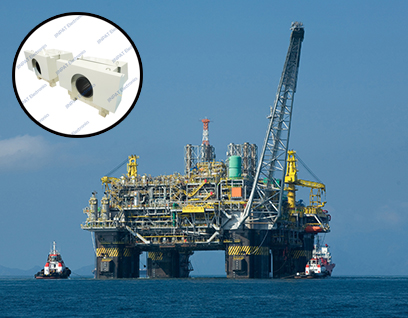
JINPAT Oil Drilling Slip Rings: The Top 6 Questions Engineers Ask—Answered Here

Q1: The main shaft has a diameter of 220mm and includes hydraulic lines; can the slip ring’s through-bore accommodate them?

A: With room to spare. JINPAT offers a wide range of standard bore diameters—from 100mm to 980mm—and supports custom non-standard specifications. The main shaft and cabling can pass directly through the bore, enabling coaxial mounting that utilizes every inch of available mechanical space.

Q2: Given the harsh conditions—including wind, sand, and heavy rain—is an IP65 protection rating sufficient?

A: It meets the standards completely. Our products have been rigorously tested by CNAS-accredited laboratories. Featuring aging-resistant sealing rings paired with a 316 stainless steel housing, the units withstood 500 hours of salt spray testing without any ingress. The real-world operational track records of CNOOC and CNPC in extreme offshore and desert environments serve as the ultimate proof of their durability.

Q3: Factory-prewired leads can be too rigid; can I handle the wiring myself on-site?

A: That is precisely one of our key features. The interior of the slip ring is pre-fitted with copper bolt connection posts or terminal blocks. Based on your specific on-site requirements, you can use your own cables—cutting, crimping, and securing them directly—offering exceptional flexibility during installation.

Q4: Since the slip ring is mounted dozens of meters high, what can be done to simplify inspection and maintenance?

A: No extensive disassembly is required. JINPAT has designed a transparent inspection window that allows you to assess carbon brush wear simply by shining a flashlight through it. Should replacement be necessary, you need only unscrew the maintenance port cover—a task that can be performed by a single person, reducing maintenance time from a full morning down to just fifteen minutes.

Q5: Does the large through-bore design compromise the slip ring’s current-carrying capacity?

A: Not in the slightest. Current-carrying capacity is determined by the contact ring area and contact design; JINPAT employs a multi-contact parallel connection technology to ensure robust performance. For instance, our 980mm large-bore models can still stably transmit currents exceeding 540A, successfully combining spacious internal clearance with powerful electrical transmission capabilities.

Q6: JINPAT pricing is higher than that of standard brands—is it worth it?

A: Let’s do the math: unplanned downtime on a drilling platform can cost as much as 200,000 RMB per hour. Through its high reliability and rapid maintenance capabilities, JINPAT minimizes the risk of failure. For most users, the price difference is recouped within just six months solely through the reduction in downtime.

Summary:

If your project faces the challenges of harsh operating conditions, the JINPAT technical team has selection solutions ready for you. Contact us to ensure a more secure and reliable power supply for your drilling operations.
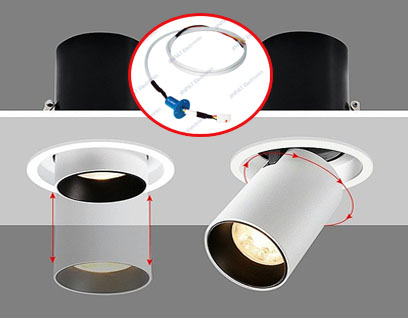
How to light a rotating lamp using a JINPAT miniature slip ring?

The LPM series miniature slip rings are designed specifically for rotating lighting fixtures, ensuring stable power and signal transmission during rotation. They are easy to install and have a long lifespan.

Rotating lighting fixtures, with their dynamic lighting effects, are widely used in stages, exhibition halls, architectural landscapes, and modern homes. However, achieving stable power and signal transmission while the fixture rotates continuously has always been a technical challenge in design. Traditional cable winding methods not only limit the rotation angle but also pose risks of wear and breakage, affecting product lifespan and safety.

To address these traditional problems, JINPAT has launched the LPM series of miniature slip rings. As an electrical rotary connector, it can transmit power and signals from a stationary structure to the rotating part, achieving unrestricted 360° continuous rotation. This solves the cable winding problem, allowing for more flexible lighting design and more reliable performance.

The core advantages of the JINPAT LPM miniature slip ring can be summarized in four main features: First, its compact and robust structure, with an IP40 protection rating for effective dust protection and a miniaturized design for easy integration, easily adapting to the internal space of various compact lighting fixtures. Second, extremely convenient installation; the product comes with standard connectors, truly achieving “plug and play,” significantly reducing assembly time for clients and lowering system integration complexity. Third, powerful and stable electrical signal transmission performance; it can carry 5A of current to meet motor drive requirements and also transmit control signals, thereby achieving precise and intelligent lighting control. Fourth, an ultra-long service life; based on precise precious metal contacts and a low-wear design, its lifespan can reach 5 million revolutions, and its excellent durability significantly reduces maintenance needs and long-term operating costs.

Why Choose JINPAT LPM Miniature Slip Rings?

As a professional slip ring manufacturer, JINPAT is committed to the research and development and production of high-reliability electro-rotary connection technology. The LPM miniature slip ring series is the culmination of our engineering experience, characterized not only by excellent specifications but also by:

Stable and Reliable: Each product undergoes rigorous testing to ensure consistent performance under complex operating conditions.

Customized Solutions: We can provide flexible, customized solutions based on customers’ specific voltage, current, signal type, and installation size requirements.

Global Service: Technical and service support is available in Vietnam and multiple regions worldwide, ensuring rapid response to customer needs.

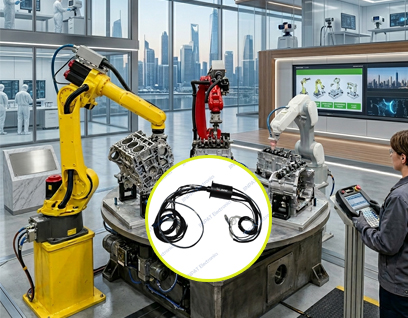
Deconstructing the Three Key Technologies Behind JINPAT Integrated Through-Bore Slip Rings

Many rotary tables experience packet loss and connection interruptions in their Gigabit Ethernet links while rotating. The root cause lies in the channel crosstalk and resistance fluctuations inherent in standard slip rings, which disrupt the impedance continuity and noise immunity required for high-speed differential signals.

JINPAT integrated through-bore slip rings have successfully resolved this challenge by leveraging three core technologies.

Technology 1: Integrated “Ring-within-a-Ring” Structure

This slip ring features a unique design: a set of smaller-diameter electrical slip rings is integrated *inside* the traditional hollow shaft. This design is not merely a technical flourish; its core objective is to physically isolate different types of signals. The larger outer rings are responsible for transmitting power and low-speed signals, while the smaller inner rings are dedicated exclusively to the transmission of Gigabit Ethernet and high-sensitivity sensor signals. This inherent separation mechanism naturally minimizes crosstalk between high-power circuits and low-voltage circuits to the greatest extent possible. Within a limited physical footprint, this “layered and partitioned” design philosophy enables a greater number of circuits to coexist harmoniously.

Technology 2: Transmission Channels Optimized for Gigabit Ethernet

JINPAT has implemented a dedicated impedance-matching design specifically for Gigabit Ethernet circuits, further enhancing transmission performance through the incorporation of a shielded ring structure. Empirical test data demonstrates that, even under continuous rotational operation, the Bit Error Rate (BER) of signals transmitted through this slip ring consistently remains below 10⁻⁹. This means that even during the transmission of a complete 4K HD movie, the resulting data error volume amounts to less than half a byte—a level of signal fidelity so exceptionally high that the human eye is utterly incapable of detecting any imperfections.

Technology 3: Hybrid Signal Circuit Layout

In addition to its Gigabit Ethernet signal transmission capabilities, this slip ring can simultaneously integrate encoder signals, analog data, digital I/O, and power lines. All circuits are systematically arranged within a single, compact housing, ensuring that they operate stably without mutual interference. For turntable-based equipment—specifically applications requiring the simultaneous transmission of position feedback, control commands, and high-speed data—this single slip ring unit serves as a complete, integrated solution for electrical rotary connections.

Not all slip ring manufacturers dare to explicitly list Gigabit Ethernet compatibility within their product specifications. JINPAT, however, not only incorporates this into its technical parameters but also provides concrete performance metrics to substantiate the claim: specifically, a Bit Error Rate (BER) as low as 10⁻⁹.