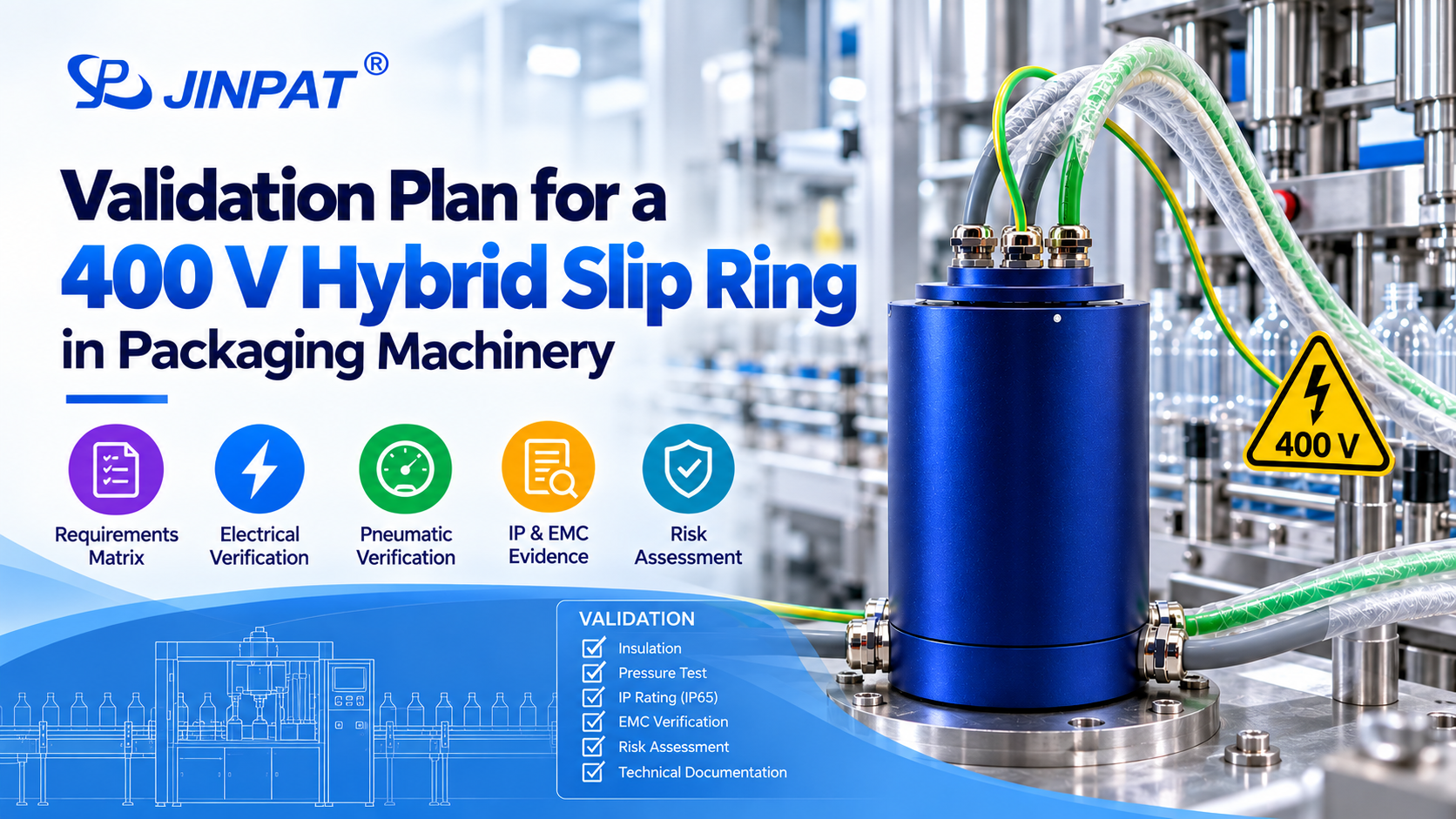
Define the system boundary first
The hybrid slip ring is one component within the machine’s electrical, pneumatic and mechanical architecture. Define the stationary supply, rotating loads, pressure source, valves, hoses, protective measures and control system that form the complete installation. Validation cannot be completed from a product photograph or abbreviated model code.
The recorded reference configuration is associated with filling equipment and lists electrical operation up to 400 V, compressed air up to 10 bar and IP65 protection. Each value needs a requirement, test condition and traceable record for the exact quoted unit.
Build a requirements-to-evidence matrix
List the source of every requirement, the acceptance criterion, the verification method and the responsible party. Cover circuit count, current, voltage, insulation, pressure, medium, leakage, flow, speed, environment, mounting, service access and documentation. Keep deviations visible until they are closed or formally accepted.
Electrical verification
Check the circuit schedule against the released drawing and terminal plan. Review creepage, clearance and insulation coordination using the standards applicable to the final machine. Define continuity, protective-earth, insulation-resistance and dielectric tests with voltage, duration and pass criteria. Confirm the behavior of representative loads during rotation.
Pneumatic verification
Define whether 10 bar is the working or test pressure and specify the approved medium, temperature and rotation state. Perform pressure-hold, leakage and pressure-drop tests using calibrated equipment. Include dynamic operation when the machine rotates continuously. Verify that fittings and hoses are rated and installed according to their own requirements.
IP, EMC and certification evidence
For IP65, identify the tested configuration and the conditions required for connectors, ports and mounting. Review cleaning chemicals separately. For EMC, examine the complete cable, grounding and drive system and test representative operating modes. For any UL statement, verify the actual certificate or recognition, product identity and conditions of acceptability before publishing or placing it in the technical file.
Validate the mechanical interface
Review axis alignment, tolerances, mounting stiffness, anti-rotation, hose movement, cable bend radius and replacement access in the machine model. A rotation test should monitor pressure, leakage, electrical continuity, temperature, noise and vibration. External hose force and misalignment can affect both seals and contacts.
Connect the component review to the risk assessment
Consider loss of air pressure, hose release, electrical insulation failure, contamination ingress, unexpected rotation and incorrect reconnection after service. Define protective measures at machine level. The IP rating does not establish hygienic suitability or explosion protection, and the component alone does not establish conformity of the complete machine.
Retain the approved drawing, calculations, supplier reports, inspection results, declarations required by the project and deviation approvals under revision control. The internal technical file must preserve the exact product identity even though public marketing must hide the project code.
Release only against closed evidence
Use the matrix to make the release decision. Close safety-critical deviations before production. When loads, pressure, cleaning process or installation change, reassess the affected requirements rather than assuming the earlier evidence remains valid.
The same discipline improves SEO content: public claims should come from verified evidence, while configurable features should be described as engineering options that require application review.