JINPAT Professional Monitoring Equipment Slip Ring Manufacturer

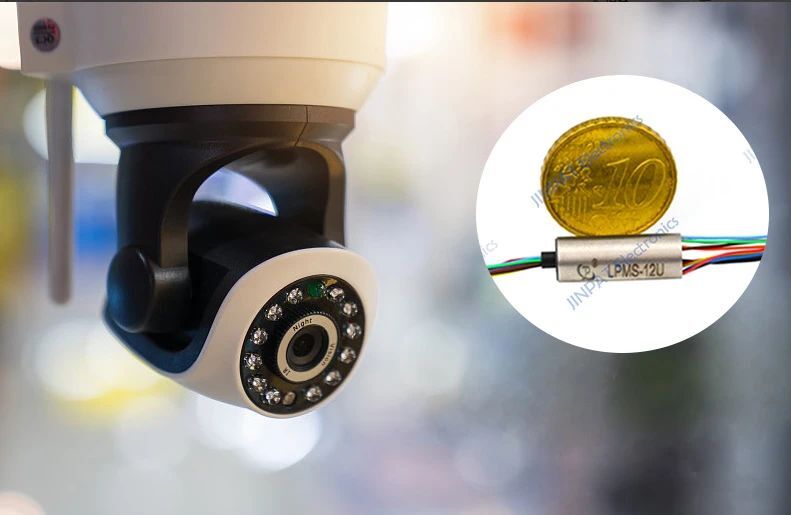
Since 1839, camera photography products have evolved from ordinary cameras to cameras that can simultaneously transmit audio and video signals, and can meet the 360 degrees rotation function without blind spots. The application fields of monitoring devices also range from public transportation monitoring and security systems to household pet and baby monitoring and recording devices. Behind each surveillance camera, there is a corresponding high-definition camera slip ring.


The slip ring is an essential component in the entire monitoring system. It is responsible for monitoring the audio and camera signal transmission required for the camera, and meeting the 360 degrees rotation requirements. As the most critical and vulnerable component in the entire system, the reliability of the slip ring is the key to determining the long-term stable operation of the monitoring system. As a veteran slip ring manufacturer, JINPAT has rich experience in slip ring structure design,ensuring excellent slip ring quality and stable performance.


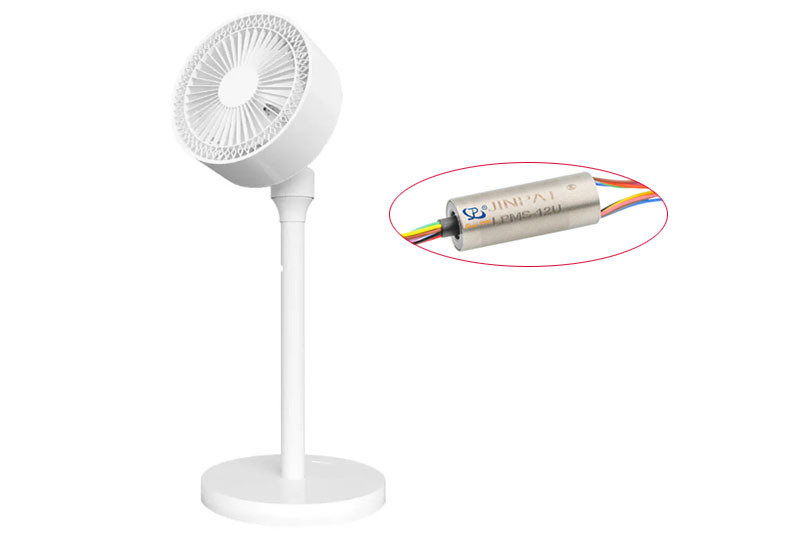
JINPAT has designed slip rings that matchpan tilt camera products such as camera arms and handheld stabilizers. The LPMS ultra micro slip ring has an outer diameter of only 4.5mm, making it a small-sized slip ring suitable for various small camera devices. There are also LPCC series slip rings that can meet the transmission of high-definition video signals such as HD-SDI or 3G-SDI. JINPAT surveillance camera slip rings are relatively light weight, easy to disassemble and assemble, with low torque. The shell is mostly made of stainless steel material, which has strong corrosion resistance and greatly prolongs the life of the slip ring. Short in length, suitable for installation in compact spaces. In addition, JINPAT also supports customization of various products, greatly meeting the needs of every user.


As a professional manufacturer of conductive slip rings, JINPAT is committed to providing high-quality customized products and solutions for every customer.

The field of medical robots deserves attention from slip ring manufacturers

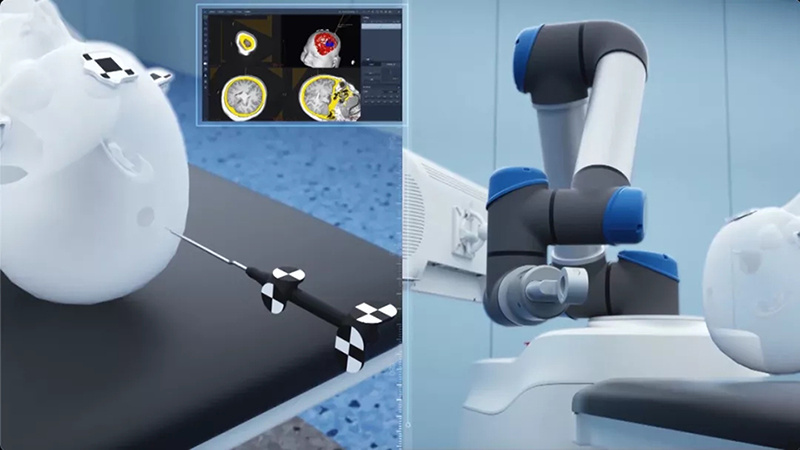
Due to its ability to replace manual labor,robots have a wide range of applications. As a well-known slip ring manufacturer in the industry, JINPAT has provided countless rotating conductive solutions for robots with various functions. From the case of JINPAT, the vast majority of these slip ring robots are applied to traditional manufacturing industry robots. However, with the development of time, robots have gradually been released into other fields and applied in other emerging fields. Among these new applications, surgical robots are the most typical representative.


Compared to the manufacturing industry where robots need to repeatedly perform high-intensity labor during use,surgical robots only need to assist doctors in completing high-precision surgeries in a short period of time. Some robots need to independently complete some of the less difficult patient handling or special disease detection tasks,which are not very intensive. At present, medical robots that require the installation of slip rings and have already been put into use, including advanced cardiovascular and cerebrovascular surgical treatment robots. These robots integrate high-definition video and high operational accuracy, and can quickly assist doctors in disease diagnosis and surgery. The slip rings use dare a combination product that integrates 2K or more SDI high-definition video signals.


As an established manufacturer of slip rings in the industry, JINPAT is one of the earliest manufacturers to contact and develop slip rings for medical robots. Currently, JINPAT has developed dozens of specialized slip rings for intelligent robots in the medical industry. These slip rings are commonly used in orthopedic treatment robots,endoscopic treatment robots, and cardiovascular and cerebrovascular robots,including traditional electrical signal combination slip rings andoptoelectronic integrated slip rings.


With the increasing investment in the field of robotics in the medical industry, various new robots with different functions have been developed. For example, a tumor treatment robot developed by other companies recently integrates various devices such as tumor treatment equipment and sports operating tables. Therefore, multiple sliding rings need to be used throughout the entire system. The radiation therapy module requires a high-power pulse signal and power integrated sliding ring, or a high-frequency and power integrated sliding ring. If the operating table is endowed with infinite rotation function, it is necessary to add a sliding ring that integrates multiple vital sign monitoring signals to achieve real-time monitoring of various symptoms during the patient’s treatment process.

Factors Affecting the Cost of Conductive Slip Rings

For the manufacturing industry, cost is always an unavoidable topic. Various factors influence the ex-factory price of manufacturing products, thereby affecting the price of end devices. In the conductive slip ring industry where JINPAT operates, while certain high-end conductive slip rings require significant technical expertise for R&D, many mid-to-low-end products have readily available templates for reference.


Due to the wide availability of material supply channels for mid-range conductive slip rings, manufacturers new to the industry generally start with mid-to-low-end products with transparent price costs. When the production volume of these products reaches a certain level,they can effectively control the production cost of the conductive slip rings,thereby effectively controlling the ex-factory price and securing a sustainable profit. However, for mid-to-low-end products, while this approach can meet the survival needs of some startups, the low technical content and product markup are insufficient to support a company’s long-term survival. On the other hand,mid-to-high-end conductive slip rings have higher technical content, which not only tests the manufacturer’s technical prowess but also demands significant expertise in cost control.


From a cost perspective, aside from the basic material and labor costs, mid-to-high-end conductive slip rings also incur some hidden costs. Some conductive slip rings require various certifications, such as ROHS, CE, etc. These environmental certification simpose stringent requirements on the heavy metals and other substances in the materials used for conductive slip rings. Purchasing materials that meet these standards will inadvertently increase some material costs. For manufacturers like JINPAT, which purchase raw materials on a large scale, the impact is minimal.


In fact, the factor that most significantly affects cost is certification. For instance, in JINPAT’ case, a particular conductive slip ring developed for marine propulsion systems needs to pass certification from an international classification society. The price for a single certification report can exceed one-third of the ex-factory price of the conductive slip ring, representing a significant cost for the manufacturer. In addition to the factors mentioned above, fluctuations in international copper prices, adjustments in labor wages, and other factors can also affect the cost of conductive slip rings to some extent.

Types of slip rings commonly used for machining parts

Among all electrome chanical products,except for a few areas where slip rings require thousands of components, the majority of slip rings used in these fields are not very complex products.Apart from bearings, brushes (carbon brushes), and wires, the number of components in other parts of the slip ring is relatively small. There are also many processing techniques for these parts, including injection molded parts,stamped parts, pressure (casting) castings, and machined parts. The most commonly used slip ring models are injection molded parts. The capsule hollow shaft series standard slip ring with the highest annual production and sales volume of JINPAT uses a large number of injection molded internal and external components.


Stamped parts, on the other hand, are mainly made of slip ring shells. The standard micro and ultra micro slip rings of JINPAT use stainless steel shell stamped parts. The use of stainless steel shell stamped parts can significantly improve the impact resistance and other performance of the slip ring. The same principle applies to using die castings as the outer shell of slip rings. Due to the harsh working environment, most of the engineering machinery slip rings developed by JINPAT are mainly made of die castings.


The large-scale use of machined parts as stator and rotor components for slip rings includes gas-liquid slip rings,fiber optic slip rings, high-frequency slip rings, and some customized slip rings. Among them, the standard model of the JINPAT gas-liquid series slip ring mainly uses aluminum alloy material for its main components, while its customized version mostly uses steel. Therefore, in general, the customized version of the JINPAT gas-liquid slip ring weighs much more than the standard model, and of course, it can withstand much greater gas-liquid pressure.


Let’s take a look at fiber optic slip rings and high-frequency slip rings. Whether they are standard products or customized products, the main components of the stator and rotor of these two types of slip rings are made of stainless steel material. However, due to the different transmission media, the internal structure of these two products may also be slightly different. For example, high-frequency slip rings do not require a speed exceeding 100rpm, while the speed of fiber optic slip rings may reach 20000rpm.Therefore, the requirements for machining are not the same. Obviously, due to the higher speed of fiber optic slip rings, their requirements for machining are also higher.

JINPAT slip ring helps the development of the construction machinery industry in 2024

Engineering machinery slip rings have always been a key product of JINPAT, with an annual production of nearly 10000 sets of different models in this series. Among these engineering machinery slip rings, there are both low-voltage slip rings for vehicle use and high-voltage high-power slip rings for offshore heavy equipment. As an established supplier in the field of engineering machinery slip rings, JINPAT still releases several new products every year. Recently, JINPAT has two new products to be delivered to customers. Let’s briefly introduce them.


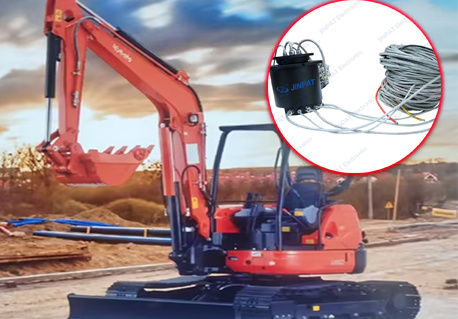
Firstly, let’s take a look at the slip ring used on the top of the JINPAT excavator. As excavators are often used outdoors,this one has a higher level of protection to assist in stable operation. This series of products mostly use a semi enclosed cylindrical shell, and for ease of installation, its volume is not too large. In terms of electrical performance, in order to achieve normal operation of the equipment, the working voltage of this slip ring from JINPAT has reached 650VAC.


The reason why its voltage has increased so greatly is that this model of product is specifically developed for the top of excavators with super strong lifting capacity. The addition of high voltage and high current makes the power transmission capacity of this type of slip ring reach 50KW. In addition to this new product developed for heavy-duty excavators, JINPAT has also launched a new type of marine crane slip ring this year. Due to the confidentiality requirements of customers, it is not convenient to disclose its model here. It is also a high current slip ring.


Marine cranes are the most common construction machinery in offshore heavy industry equipment. Due to the need to ensure long-term reliability, the protection level of the marine crane slip ring is generally relatively high. JINPAT, the latest marine crane slip ring,has a protection level of IP65. Its power module includes one 250A current path and three 40A current paths, with a working voltage of 230 VAC. In order to ensure the safety of the equipment on the appearance, stainless steel casing design is adopted, and the design complies with EN-IEC61439.


Like most slip rings from JINPAT, the parameters of this product are highly customized based on the characteristics of the terminal. For excavators, which are relatively simple construction machinery, JINPAT’s engineering team is already familiar with customizing slip rings for them. With the electrification of the field of engineering machinery slip rings, more and more integrated high-voltage and high-power engineering machinery slip rings will appear in a large number of new energy engineering machinery. In this technical field, JINPAT is also at the forefront of international slip ring manufacturers.

JINPAT Survey Robot slip ring

In sewer surveys or outdoor multifunctional robots, conductive slip rings are installed on the robot’s gimbal or control center for power and signal transmission. Some more advanced robots also require the integration of a single-mode fiber optic slip ring inside the conductive slip ring to achieve the ability to transmit high-speed data over longer distances. Taking the sewer robot used for survey as an example, the conductive slip ring it uses generally integrates one SDI high-definition video signal path. In addition, some special robots may also integrate infrared cameras in their cameras, so their corresponding conductive slip ring also needs to add corresponding paths to support the infrared video signal path.


When the situation of the scene that needs to be surveyed is unclear, this type of survey robot with high-definition or infrared cameras can be used for reconnaissance to determine the basic situation in the scene. If this type of survey sewer robot integrates harmful gas sensors, the reconnaissance effect will be better.


In order to obtain more accurate information about the robot’s surroundings, many firefighting robots are equipped with 360 ° optical framing or other types of sensors, so conductive slip rings need to be integrated in these firefighting robots. As a well-known manufacturer of conductive slip rings in the industry, JINPAT has the ability to develop conductive slip rings for various types of robots. JINPAT has developed over a hundred corresponding conductive slip ring product cases for various types of sewer survey robots and outdoor robots such as firefighting.

JINPAT continuously explores new technologies in slip rings

In this era of constant innovation,survival in the competitive market requires relentless exploration and innovation in all product categories. As a company with nearly 30 years of experience in the slip ring industry, JINPAT firmly believes in this truth and has been committed to technological innovation in its independently developed slip ring products for many years. The research and development team at JINPAT has always maintained vitality and innovation in their pursuit of exploring and applying new technologies.


In terms of improving, modifying, or updating slip rings, adjustments are continuously made based on customer feedback. The larger the production volume and the wider the application of the conductive slip rings, the higher the frequency of technological improvements.As early as 2019, JINPAT conducted a technological overhaul of the plug-in slip rings. Plug-in slip rings emerged as alternatives to mercury slip rings, but they often need to withstand power voltage and high currents in extremely small volumes. After prolonged high-speed operation in such environments, plug-in slip rings can encounter issues such as overheating.


The R&D team at JINPAT promptly conducts fault analysis on slip rings encountering technical problems and swiftly explores new technical solutions. After a period of research and improvement by the team, the optimal solution was determined to be the new standard plug-in slip ring. JINPAT’s Technology Testing Center is responsible for testing the newly structured plug-in slip rings.


The latest generation of slip rings has successfully passed a series of performance tests, including lifespan tests,while enduring power electricity, fully meeting design standards. They have shown significant improvements over the previous generation of plug-in slip rings in electrical performance, temperature resistance, and other aspects.Currently, JINPAT’s new generation plug-in slip rings are selling well in various industries, becoming the new generation of popular accessories.


In order to maintain an unbeatable position in the fierce market competition, JINPAT always adheres to independent research and development of new slip ring technologies. Its precision conductive slip rings are sold in over a hundred countries and regions globally, providing thousands of individuals and enterprises with cost-effective rotating conductive solutions.

JINPAT Temperature Resistant Conductive Slip Ring

Temperature resistance is an important basic performance of many electromechanical equipment. As a component widely used in electromechanical equipment, conductive slip rings sometimes need to have certain temperature resistance performance. For example, in some engineering machinery specially tuned for harsh conditions, the conductive slip rings used require temperature resistance to meet the requirements of operating in the cold areas of Siberia and the hot and rainy regions of Brazil. As an international veteran slip ring manufacturer, JINPAT has developed many conductive slip rings with high and low temperature resistance.

In addition to extreme high and low temperature environments in natural states, many electromechanical equipment operates in artificially set special high temperature environments. The conductive slip rings used on these devices also need to have the same temperature resistance performance as the equipment. In order to achieve the corresponding level of high and low temperature resistance performance, these conductive slip rings require much stricter material selection for key components such as housing, bearings, and brush wires compared to ordinary conductive slip rings. Of course, their mechanism design is also different from ordinary slip rings.

In the temperature resistant conductive slip rings developed by JINPAT, there is a category of products that operate in extreme high and low temperature environments for a long time. Taking the high-temperature roller conductive slip ring developed by JINPAT as an example,it operates in an environment with a constant temperature above 100℃ for a long time. In order to develop this product, JINPAT collaborated with a constant temperature box manufacturer to specially develop an ultra-high-temperature constant temperature life test bench and completed its full-life test overseveral months. However, temperatures above 100℃ do not reach the temperature limit of some electromechanical equipment, and some conductive slip rings may be immersed in environments with temperatures exceeding 200℃.

With the experience of developing high-temperature roller conductive slip rings above 100℃, JINPAT continues to develop slip rings suitable for higher temperature use. This conductive slip ring from JINPAT, which can operate in an environment with superheated silicone oil above 200℃, is a typical successful case. Its model number is LPT012-0802-HT, which is a relatively small-sized product. In order to better observe the wear of the friction pairof the conductive slip ring, this model product is designed with an opening onthe housing, similar to the ultra-high-speed conductive slip ring developed byJINPAT, but with different purposes. The former is used for observation, while the latter is used for observation, heat dissipation, and introduction of cold air.

In addition to conductive slip rings used in specific scenarios or equipment, many conductive slip rings also have very high requirements for temperature shock resistance. Many models of conductive slip rings require the ability to withstand short-term -60℃ to +120℃ temperature shock during design, while some products also require the conductive slip rings to withstand short-term temperature shock of -100℃ to +180℃ in a vacuum environment. With complete high and low-temperature test equipment and an experienced engineering technical team, JINPAT also has the capability to design and develop such conductive slip rings.

JINPAT Pneumatic and Hydraulic Integrated Slip Ring Technology Analysis

JINPAT has been deeply involved in the slip ring industry for nearly 30 years and has long possessed the technical strength to independently develop pneumatic and hydraulic integrated slip rings. In the field of pneumatic and hydraulic integration, JINPAT has mastered several key core technologies, capable of providing various new technical solutions such as integrating pneumatic, hydraulic, and other signal modules to meet the demands of new conductive mechanical equipment.


Among numerous types of slip rings,pneumatic and hydraulic slip rings are relatively unique in function. They are typically used for the transmission of gases and liquids, providing raw material supply, equipment cooling lubrication, and equipment driving power to application terminals. Generally, pneumatic and hydraulic slip rings are integrated into other types of slip rings. The LPPL000-36A-0106-1502-0301-E2slip ring is a multifunctional pneumatic and hydraulic + electric + signal combination slip ring. Its pneumatic and hydraulic slip ring module features 36air passages, with a total length of 842mm and a maximum diameter of 220mm,with pneumatic pipes of G3/8″ specification at P10mm.


The main materials of pneumatic and hydraulic slip rings are metal, primarily lightweight aluminum alloys and various grades of stainless steel. Aluminum alloy pneumatic and hydraulic slip rings have unique advantages in light weighting, but their pressure tolerance is lower compared to stainless steel, so they are generally used more for transmitting air or liquid media within a certain pressure range. On the other hand, stainless steel pneumatic and hydraulic slip rings far exceed aluminum alloys in hardness and other aspects, so pneumatic and hydraulic slip rings on the market that can withstand higher pressures are mostly made of stainless steel. JINPAT also develops high-pressure-resistant pneumatic and hydraulic slip rings using stainless steel materials.


The difference in materials determines the different pressure tolerances of pneumatic and hydraulic slip rings. Therefore,when in use, pneumatic and hydraulic slip rings should operate within their designed pressure ranges. If the pressure of the transmitted gas or liquid exceeds the designed pressure tolerance of the pneumatic and hydraulic slip ring, it may lead to damage and pose safety hazards, which is one of the important precautions for using pneumatic and hydraulic slip rings.


The service life of pneumatic and hydraulic slip rings is also influenced by the chemical properties of the transmission medium. Generally, the chemical properties of compressed air, water,lubricating oil, and coolant are relatively stable and will not corrode the interior of aluminum alloy or stainless steel pneumatic and hydraulic slip rings. In some cases of JINPAT, some customers use pneumatic and hydraulic slip rings to transmit corrosive liquids. During later maintenance, a large amount of rust residue is cleaned from the interior, which affects the smooth rotation of pneumatic and hydraulic slip rings and shortens their lifespan, even leading to scrapping.

JINPAT Pneumatic and Hydraulic Integrated Slip Ring Technology Analysis

JINPAT has been deeply involved in the slip ring industry for nearly 30 years and has long possessed the technical strength to independently develop pneumatic and hydraulic integrated slip rings. In the field of pneumatic and hydraulic integration, JINPAT has mastered several key core technologies, capable of providing various new technical solutions such as integrating pneumatic, hydraulic, and other signal modules to meet the demands of new conductive mechanical equipment.


Among numerous types of slip rings,pneumatic and hydraulic slip rings are relatively unique in function. They are typically used for the transmission of gases and liquids, providing raw material supply, equipment cooling lubrication, and equipment driving power to application terminals. Generally, pneumatic and hydraulic slip rings are integrated into other types of slip rings. The LPPL000-36A-0106-1502-0301-E2slip ring is a multifunctional pneumatic and hydraulic + electric + signal combination slip ring. Its pneumatic and hydraulic slip ring module features 36air passages, with a total length of 842mm and a maximum diameter of 220mm,with pneumatic pipes of G3/8″ specification at P10mm.


The main materials of pneumatic and hydraulic slip rings are metal, primarily lightweight aluminum alloys and various grades of stainless steel. Aluminum alloy pneumatic and hydraulic slip rings have unique advantages in light weighting, but their pressure tolerance is lower compared to stainless steel, so they are generally used more for transmitting air or liquid media within a certain pressure range. On the other hand, stainless steel pneumatic and hydraulic slip rings far exceed aluminumalloys in hardness and other aspects, so pneumatic and hydraulic slip rings on the market that can withstand higher pressures are mostly made of stainless steel. JINPAT also develops high-pressure-resistant pneumatic and hydraulic slip rings using stainless steel materials.


The difference in materials determines the different pressure tolerances of pneumatic and hydraulic slip rings. Therefore,when in use, pneumatic and hydraulic slip rings should operate within their designed pressure ranges. If the pressure of the transmitted gas or liquid exceeds the designed pressure tolerance of the pneumatic and hydraulic slip ring, it may lead to damage and pose safety hazards, which is one of the important precautions for using pneumatic and hydraulic slip rings.


The service life of pneumatic and hydraulic slip rings is also influenced by the chemical properties of the transmission medium. Generally, the chemical properties of compressed air, water,lubricating oil, and coolant are relatively stable and will not corrode the interior of aluminum alloy or stainless steel pneumatic and hydraulic slip rings. In some cases of JINPAT, some customers use pneumatic and hydraulic slip rings to transmit corrosive liquids. During later maintenance, a large amount of rust residue is cleaned from the interior, which affects the smooth rotation of pneumatic and hydraulic slip rings and shortens their lifespan, even leading to scrapping.

JINPAT has been invited to the 11th Shenzhen Military Expo to explore new opportunities

JINPAT is honored to be invited to participate in the 11th Shenzhen Military Expo , at the new venue of the Shenzhen International Convention and Exhibition Center. This Shenzhen Military Expo attracted over 500 exhibitors, and JINPAT is privileged to attend this event, collaborating with other exhibitors to explore new opportunities for industry development.


The Military Expo serves not only as a leading platform to showcase cutting-edge military technology and equipment but also as a vital arena for the exhibition, exchange, and learning within the civil-military integration industry. As a specialized slip ring manufacturer with robust technical capabilities, JINPAT has nearly 30 years of industry experience. With a dedicated team of nearly a hundred professionals in design,process engineering, experimental testing, quality control, and more, the company is committed to providing customers with outstanding personalized slip ring solutions and technical services.


During the exhibition, JINPAT enthusiastically engaged with fellow exhibitors to explore new opportunities for collaboration. Through the sharing of product case studies, the company showcased a series of innovative self-developed products, as well as application cases involving production equipment and testing stations. The diverse range of slip ring exhibits attracted a large number of users for consultation. Simultaneously, JINPAT arranged for its professional staff to provide detailed explanations, allowing users to gain a comprehensive understanding of JINPAT   products and research capabilities. This facilitated a deeper appreciation and understanding of the company’s independently developed technologies, diverse product portfolio, and comprehensive service guarantees, providing audiences with a more intuitive understanding of JINPAT’s products, technologies, and solutions.


JINPAT has consistently adhered to the philosophy of “Crafting Quality with Ingenuity and Leading Change with Innovation,” and actively pursues the corporate vision of “Customer First, Quality First.” The company is dedicated to providing professional slip ring solutions for the global industrial system, playing a crucial role in supporting the accelerated development and high-end growth of the global information industry. Through this Military Expo, JINPAT showcased its independent research and innovation capabilities in different scenarios,highlighting the outstanding achievements of its products in practical applications. The company engaged in in-depth discussions with more partners and customers, collectively exploring the future development direction of slip ring technology. JINPAT will continue to strive, providing customers with more advanced and reliable slip ring solutions, contributing to innovation and development across various industries.

JINPAT Through-Hole Ethernet Signal Slip Ring

Within JINPAT slip ring product line, the through-hole slip ring is a strategic product widely applied in various large-scale equipment. With the popularization of automation and electromechanical integration in industries, common computer signals such as USB and Ethernet have long been integrated into slip rings. However, due to the limitations of the through-hole structure, signals like USB 3.0, HDMI, and DP cannot be transmitted through this type of slip ring. In contrast, Ethernet signals, with their unique signal characteristics, are more commonly found in through-hole slip rings. As a well-established slip ring manufacturer with over20 years of industry experience, JINPAT has customized nearly a thousand through-hole Ethernet signal slip rings for customers.


JINPAT demonstrates exceptional technical capabilities in the field of Ethernet signal slip rings, particularly in terms of the maximum supported aperture. In through-hole slip rings, the transmissionof signals is closely related to the size of the through-hole. Currently,JINPAT 100 Mbps Ethernet slip rings can achieve transmission within a maximum300 mm aperture, while their 1 Gbps Ethernet slip rings can transmit within a maximum 180 mm aperture. As JINPAT continues to improve its products and technologies, these figures are expected to be further surpassed in the future,resulting in even larger apertures for through-hole Ethernet signal slip rings.


JINPAT delivers a large number of Ethernet signal slip rings every month. Among these products, apart from capsule Ethernet slip rings specifically developed for monitoring devices, the majority consists of hollow shaft series Ethernet slip rings. For instance, the latest product introduced, LPT038-02E3, is a through-hole slip ring without a powerring, integrating only two channels of 1 Gbps Ethernet signals. JINPAT also offers other newly developed through-hole Ethernet signal integrated slip ring models, including LPT045-0410-04S-01E3, LPT030-0505-04S-01E3,LPT050-0405-01PE-01E3, LPT130-0812-08S-E2-02E3, and more.

JINPAT Medical Equipment Slip Ring Types

Medical equipment has always been representative of high-value products in the field of medical devices,especially devices like CT scanners. Like other industrial sectors, the medical device industry also relies on the support of numerous downstream industries.JINPAT, as a specialized slip ring manufacturer, is part of the medical device industry chain and has the ability to provide corresponding slip rings for various medical equipment with different functions.


JINPAT has developed multiple types of slip rings for medical equipment. Apart from the large through-hole pancake slip rings with a diameter exceeding 1200mm developed for CT scanners, the rest of the slip rings are categorized as medium and small-sized products. Among these products, the capsule series slip rings are the mainstay, with only a few models belonging to the hollow shaft series. Whether capsule slip rings or hollow shaft slip rings, these products developed for medical equipment are primarily customized models. To meet the stability requirements of medical equipment, these slip rings use gold-to-gold contacts and have been optimized in certain performance aspects.


In some specialized medical equipment with unique functions, centrifuges or other high-speed systems are integrated, and the slip rings associated with these components are mostly high-speed products.Since the rotational speed of these components generally exceeds 500rpm,standard slip rings have a design speed limit of 300rpm, which is insufficient to meet the requirements. In order to address the needs of the medical industry and similar fields, JINPAT has developed the LPC/LPM-YS series of capsule standard slip rings. This series of products has a design speed of up to 2000rpm, meeting the requirements of the majority of medical or other high-end instrument equipment available on the market.


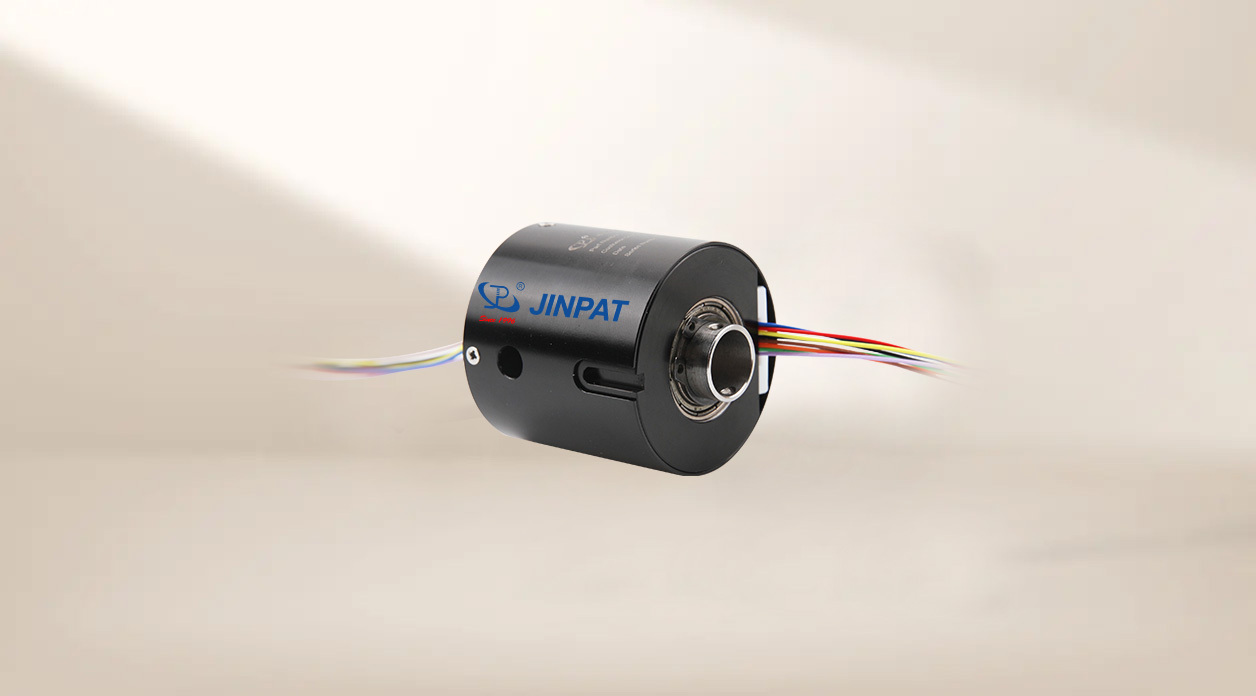
Compared to the capsule slip rings with an outer diameter of 22mm, hollow shaft slip rings have much larger copper ring diameters, which limits the transmission of certain special signals. However,this limitation is not significant in the field of medical equipment, as the most commonly used hollow shaft slip rings have a bore size of 12.7mm, and common signals in medical instruments such as USB 2.0, Ethernet, and pulse signals can be transmitted within this bore size. Hollow shaft slip rings also have an advantage in that the center through-hole can be utilized, and it can become an optoelectronic integrated slip ring after installing fiber optic slip rings. In many slip ring cases developed by JINPAT for medical equipment, there are also products with integrated single-channel fiber optic slip rings.

JINPAT Slip Ring Product Testing Scheme

As a device for rotating conduction and transmitting electrical signals, the conductive slip ring, although structurally relatively simple, requires a series of standards to regulate various operations during raw material procurement, manufacturing, and other processes to ensure its operational stability. After the conductive slip ring is manufactured into a finished product, it also undergoes multiple rounds of inspections. JINPAT, as an experienced international manufacturer of conductive slip rings, has developed a unique and distinctive product testing process.Apart from basic appearance checks, in terms of mechanics and electronics,JINPAT has many unique product testing schemes.


Take mechanical performance as an example.To verify whether a conductive slip ring meets the design criteria, JINPAT places multiple samples on the JINPAT lifespan test bench. Under powered conditions, the slip rings undergo lifespan tests at ultra-high intensities,running continuously for twenty-four hours a day. For example, the LPC-0210designed by JINPAT with a lifespan of over 100 million rotations, even though the client’s required speed is only 300rpm, JINPAT increases the speed to1200rpm on the test bench to quickly determine its total lifespan, thusobtaining accurate lifespan data in a shorter time. For first-piece products or new structure conductive slip rings, this testing method is particularly stringent.


Excellent mechanical quality conductive slip rings also require excellent electrical performance to be considered a perfect product. Electrical performance also needs to be determined through testing. For instance, on JINPAT’s lifespan test bench, the electrical parameters of the products are recorded at regular intervals. Different types of conductive slip rings have slightly different electrical parameters. When one or more of these parameters exceed the design values, its lifespan limit can be determined based on these parameters.


According to industry regulations for conductive slip rings and standards related to the design lifespan of electrical products, professional manufacturers like JINPAT generally inspect the insulation resistance, dynamic contact resistance, contact resistance fluctuation value, and isolation degree of the conductive slip rings one by one.

JINPAT Slip Ring Lifetime Testing Center provides product assurance

JINPAT is also a company focused on innovation and research and development. It has gained global recognition, but JINPAT continues to strive for higher product quality. Every year, they make process improvements and overall design enhancements to their mass-produced products. JINPAT’ standard products have undergone several iterations and updates.


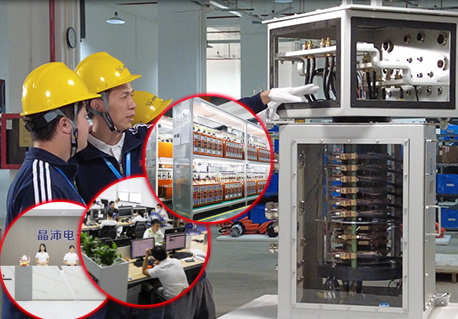
JINPAT has always set extremely strict standards for each product. To meet these standards, JINPAT has established multiple laboratories, such as raw material testing laboratories, electrical performance testing laboratories, protection level testing and environmental simulation laboratories, and product lifetime testing centers.


Taking the conductive slip ring lifetime testing center as an example, to obtain the most extreme data, the JINPAT Lifetime Testing Center operates nearly 30 sets of equipment 24 hours a day,year-round. Here, data is constantly being refreshed and surpassed at regular intervals. Every piece of data detected by the lifetime testing center is fed back to the manufacturing and design processes. In the lifetime testing center,the highest lifetime test data for JINPAT conductive slip rings has exceeded360 million revolutions, setting a new record for the lifetime of JINPAT conductive slip rings.


Based on this valuable testing data and to meet the demands of certain specific markets, JINPAT has developed and designed a range of high-lifetime conductive slip rings. This series of slip rings features standardized and modular designs, allowing for quick assembly and disassembly of the slip ring structure and rapid replacement of easily damaged parts. Compared to conventional slip rings, which become unusable once damaged, JINPAT’s high-lifetime slip rings offer better maintainability. The average lifetime of JINPAT’s high-lifetime slip rings has exceeded 250 million revolutions, reaching an international leading level. Depending on the rotation speed, their equivalent lifetime at room temperature can exceed 20 years.


Compared to other manufacturing industries,the situation in the conductive slip ring industry is quite unique, with a product customization rate exceeding 60%. As a long-standing slip ring manufacturer, around 70% of JINPAT’s product line consists of customized products. For high-lifetime conductive slip rings, JINPAT also providestailored services to its customers. JINPAT’s high-lifetime slip rings generally adopt a through-hole design, and the basic specifications such as the number of circuits, current carrying capacity, outer diameter, and hole diameter can be selected. The shell material can be aluminum alloy or engineering plastics, and the internal contacts can be gold-to-gold or other precious metals. In addition to transmitting current, this series of slip rings can also integrate signal transmission capabilities according to customer requirements, such as analog signals, digital signals, high-frequency signals, Ethernet, CAN bus signals,LSB, RS, Fire Wire, etc.

Analysis of the Technical Characteristics of Different Fiber Optic Slip Ring Models by JINPAT

JINPAT has always focused on providing cost-effective solutions for 360° rotation electrical conduction and signal transmission across various industries. They excel in the development of high-difficulty slip rings, capable of integrating multiple signals, currents,and fluid paths into a single slip ring while meeting high standards for protection, vibration resistance, and impact resistance.


Addressing the demand for 360° rotation signal transmission in the automation sector, JINPAT has developed various models of signal slip rings. Apart from specialized multi-channel USB 2.0/3.0signal slip rings, they have also developed high-definition video signal, CAN signal, control signal, and fiber optic signal slip rings based on current slip ring technology. These high-precision conducting slip rings are technically advanced products, with optoelectronic integrated conducting slip rings being the most challenging to develop. JINPAT’s optoelectronic integrated slip rings are the perfect companion for high-speed, lossless signal transmission in precision instruments and high-end automation equipment.


Taking the latest developed slip ring model, LPT000-0910-3E3-FO04, as an example, this integrated slip ring features conductivity, multi-channel signal transmission, and integrated fiber opticpaths. It operates at 480V and can transmit 3 sets of gigabit Ethernet signals.Additionally, it integrates four channels of fiber optics with a wavelength range between 1310nm and 1590nm, an insertion loss of less than 4db, and a fiber bending radius of 30mm. It also boasts excellent temperature resistance and a robust housing, capable of operating under temperatures ranging from -45℃ to +80℃. The housingis made of aluminum alloy, combining light weight and durability, ensuring reliable long-term operation of the equipment.


In comparison, the LPT000-1210-39S-01E3-12FO model has even lower insertion loss and features 12 channels of fiber optic paths with a lifespan exceeding 10 million rotations.It operates under temperatures ranging from -30℃ to +80℃ and offerseasy installation.


Within JINPAT’s optoelectronic integrated slip rings, the LPC-1F series finds broader applications, forming an independent product line. This series features compact design, with a diameter of only 24.8mm, significantly saving installation space on terminal platforms.While having a single fiber optic channel, it also integrates 12, 24, 30, and36 channels of current paths. Compared to single-channel fiber optic slip rings, this slip ring not only addresses signal transmission issues but also provides power transmission paths for customers.


Moreover, the pricing of this series is almost identical to that of single-channel fiber optic slip rings, making it acost-effective high-precision conducting slip ring. The JINPAT LPC-1F series fiber optic slip rings have a return loss greater than 45db, operating wavelength between 850~1550nm, insertion loss less than 2db with a typical value of 0.5db, and insertion loss variation of +/-0.25db with a typical value of +/-0.15db. Fiber types can be selected as single-mode or multi-mode, and connector types include ST/FC/SC/LC, among others.

Slip rings for operation in extreme environments

Many electromechanical products have corresponding protection levels, and the higher the protection level, the stronger the environmental adaptability. In the product series of JINPAT, there are also products with the highest IP68 protection level. These products include some customized miniature capsule slip rings and certain models of fiber optic slip rings. These high-protection-level slip rings can adapt to relatively extreme and harsh external environments,such as underwater high-pressure environments, high cold environments, tropical rainforest humid environments, etc.


Natural environments exist objectively, and in people’s production and life, they will always create some new environments. Some of these artificially created new environments may be much more extreme than harsh environments under natural conditions. However, in these artificially created extremely harsh environments, there are still electromechanical devices that require slip ring support in operation.


Firstly,there is high temperature. A common type of equipment is high-temperature rollers, which operate at temperatures above 100℃. Although such equipment does not have high rotational speeds and does not require changes in slip ring structure, it extremely tests the stability of slip ring operation at ultra-high temperatures. If the overall high-temperature resistance performance of the slip ring is not up to standard, it may lead to problems such as low insulation with stand voltage strength, abnormal fluctuation of dynamic resistance values, and abnormal signal transmission. In solving problems such as abnormal signal transmission and insufficient insulation withstand voltage strength of slip rings operating at temperatures above 100℃, JINPAT has rich experience. Taking the LPC-0303-HD01 high-definition video slip ring as an example, when this slip ring operates, it is immersed in 201 methyl silicone oil with a pressure of up to 140 MPa, and the maximum external ambient temperature can reach 200℃.With years of experience, JINPAT has perfectly solved the problems of poorhigh-definition video transmission and insulation withstand voltage values of this product under high temperature and high pressure conditions.


The slip rings mentioned above need to operate at extremely high temperatures, but some slip rings represent another extreme, being extremely sensitive to high temperatures. Once a certain temperature is exceeded, the performance of the slip ring will also decline linearly. These types of slip rings are generally mainly high-speed slip rings. In general, slip rings with a working speed of 20,000 rpm require certain heat dissipation measures, while slip rings with higher speeds will adopt more aggressive heat dissipation measures, such as using liquid nitrogen at -195.8℃ to cool the slip rings. Due to their extremely special purposes and very small market demand, the development technology of slip rings that can withstand temperatures close to minus 200℃ is currently blank, and there are no slip ring manufacturers with development plans or finished products.

Different Wire Types Corresponding to JINPAT Signal Slip Rings

Signal slip rings are a crucial category within slip rings, responsible for the 360° rotation transmission of signals in electromechanical systems. If classified simply by signal type, signal slip rings on the market are essentially divided into electrical signal slip rings and optical signal slip rings. The former transmit electric current using various types of conductors, and the types of conductors used vary greatly depending on the signal type. The latter transmit light in special frequency bands, using optical fibers as the transmission medium, hence optical signal slip rings are also known as fiber optic slip rings.


From the perspective of development difficulty, multi-channel fiber optic slip rings are the most technically advanced products among all signal slip rings. The technical challenge of multi-channel fiber optic slip rings, particularly single-mode fiber optic slip rings, lies in the internal prism or other lens systems. From an optical perspective, multi-channel fiber optic slip rings belong to a highly precise optical system. On the other hand, traditional electrical signal slip rings fall within the realm of electrical engineering. In contrast to the two types of wires used in fiber optic slip rings, traditional electrical signal slip rings involve a wide variety of wire types for transmitting numerous electrical signals.


Taking common signals in the electromechanical industry such as USB, DP, HDMI, and Ethernet as examples,each of these signals requires corresponding wires. JINPAT has also developed signal slip rings specifically for such signals, such as DP slip rings,multi-channel USB 2.0 signal slip rings, and gigabit Ethernet slip rings.Although the wires used in these electrical signal slip rings are specialized,fundamentally, they are achieved through the use of different common conductors twisted together and then externally connected to specialized connectors.Therefore, in the field of signal slip rings, twisted pair cables are the most widely used method for signal transmission. Apart from twisted pair cables,another common type of wire in electrical signal slip rings is coaxial cables,which consist of inner and outer layers and are available in two characteristic impedance classes of 50 and 75 ohms. These are respectively used for transmitting radio frequency signals and high-definition video signals.